
Loan Guide
Secured vs Unsecured Loans – Key Differences
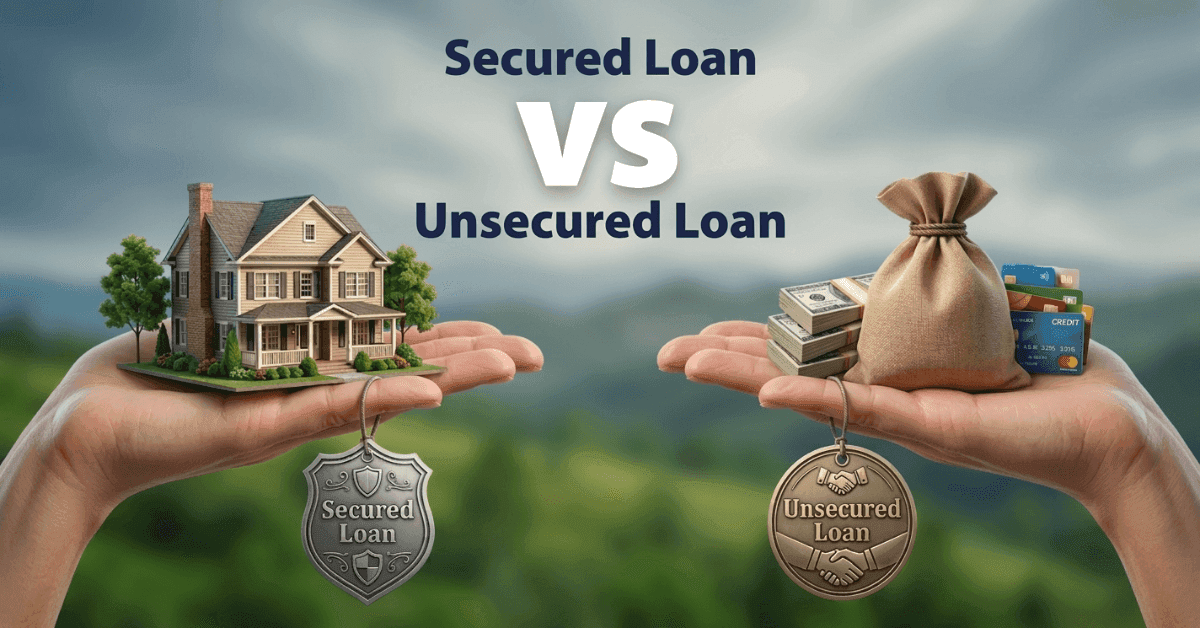
When applying for a loan, borrowers often come across two common types of loans: secured loans and unsecured loans. Understanding the difference between secured and unsecured loans is important before choosing the right option for your financial needs.
Whether you are planning to apply for a personal loan, business loan, or loan against property, knowing how secured lending and unsecured lending work can help you make smarter financial decisions.
In this guide, we will explain the secured loan meaning, unsecured loan meaning, key differences, benefits, and loan eligibility factors to help borrowers choose the right loan option.
What is a Secured Loan?
A secured loan is a type of loan where the borrower pledges an asset as collateral to the lender. The collateral can be property, gold, a vehicle, or any valuable financial asset. Because the lender has security in the form of collateral, these loans usually come with lower interest rates and higher loan amounts.
In simple terms, a loan with collateral is known as a secured loan. If the borrower fails to repay the loan, the lender has the right to recover the amount by selling the pledged asset.
Examples of Secured Loans
Some common types of secured loans include:
- Home Loan
- Loan Against Property (LAP)
- Loan Against Securities
- Auto Loan
For example, if you take a loan against property, the property is pledged to the lender until the loan is fully repaid.
Borrowers can learn more about lending regulations and financial policies from the Reserve Bank of India (RBI) official website: www.rbi.org.in
Benefits of Secured Loans
There are several benefits of secured loans for borrowers:
1. Lower Interest Rates
Since the loan is backed by collateral, lenders usually offer lower interest rates compared to unsecured loans.
2. Higher Loan Amount
Borrowers can get a higher loan amount depending on the value of the collateral.
3. Longer Repayment Tenure
Secured loans often come with longer repayment periods, making EMIs more manageable.
4. Better Chances of Loan Approval
Because the lender has security, the loan approval process may be easier for eligible borrowers.
What is an Unsecured Loan?
An unsecured loan is a loan that does not require any collateral or asset security. In other words, it is a loan without collateral.
In unsecured lending, the lender approves the loan based on factors such as:
- Income
- Employment stability
- Credit score
- Repayment history
- Overall loan eligibility
Examples of Unsecured Loans
Some common types of unsecured loans include:
- Personal Loan
- Credit Card Loan
- Short-Term Business Loan
- Education Loan (in some cases)
For example, a personal loan is usually an unsecured loan where the borrower does not have to pledge property or assets.
If you want to explore instant personal loan options, you can check the solutions available at https://www.finsbee.com/apply-for-personal-loan-online
Benefits of Unsecured Loans
Here are some key benefits of unsecured loans:
1. No Collateral Required
Borrowers do not need to pledge property or assets.
2. Quick Loan Approval
The loan approval process is often faster because there is no collateral evaluation.
3. Simple Documentation
Unsecured loans usually require minimal documentation.
4. Fast Online Application
Most lenders now offer online unsecured loans, making the process convenient.
Secured vs Unsecured Loans – Key Differences
Here are the major differences between secured loans and unsecured loans explained in a simple way:
1. Collateral Requirement
A secured loan requires collateral such as property, gold, or a vehicle. The asset acts as security for the lender.
On the other hand, an unsecured loan does not require any collateral. Borrowers can apply without pledging any assets.
2. Risk for the Lender
In secured lending, the lender’s risk is lower because the loan is backed by collateral. If the borrower fails to repay the loan, the lender can recover the amount by selling the pledged asset.
In unsecured lending, the lender’s risk is higher because there is no asset security.
3. Interest Rates
Secured loans usually come with lower interest rates because the lender has collateral protection.
In contrast, unsecured loans generally have higher interest rates since the lender takes a higher risk.
4. Loan Amount
Borrowers can typically get a higher loan amount with secured loans because it depends on the value of the collateral. Unsecured loans usually offer a limited loan amount, based on income and credit profile.
5. Loan Approval Process
The loan approval process for secured loans may take longer because lenders must verify and evaluate the collateral. Unsecured loans are usually approved faster since there is no collateral verification involved.
6. Loan Eligibility
For secured loans, eligibility depends on both the borrower’s income and the value of the pledged asset.
For unsecured loans, eligibility is mainly based on income, employment stability, and credit score.
Loan Eligibility for Secured and Unsecured Loans
Whether applying for secured lending or unsecured lending, lenders evaluate certain eligibility criteria.
Common Loan Eligibility Factors
- Credit score
- Monthly income
- Employment or business stability
- Existing debts
- Age and repayment capacity
For secured loans, lenders also consider the value and condition of the collateral.
Borrowers can also understand how credit scores impact loan approval through trusted credit information companies such as CIBIL: www.cibil.com
Types of Loans
Loans are broadly classified into secured loans and unsecured loans depending on whether the borrower needs to provide collateral. Borrowers can choose a loan based on their financial needs, repayment capacity, and eligibility.
Secured Loan Types
Secured loans require borrowers to pledge an asset as collateral. The loan amount is usually determined based on the value of the pledged asset.
Some common secured loans include:
- Home Loan – A loan used to purchase, construct, or renovate a house.
- Loan Against Property – Borrowers can pledge residential or commercial property to avail funds for personal or business needs.
- Loan Against Securities – Investors can pledge financial assets such as shares, mutual funds, or bonds to get a loan.
- Auto Loan – A loan used to purchase a vehicle where the vehicle itself acts as collateral.
These loans usually offer lower interest rates and higher loan amounts because the lender has asset security.
Unsecured Loan Types
Unsecured loans do not require any collateral. These loans are approved based on the borrower’s income, credit score, and repayment capacity.
Some common unsecured loans include:
- Personal Loan – A flexible loan that can be used for medical emergencies, travel, weddings, or other personal expenses.
- Business Loan – Designed to help businesses manage working capital, expand operations, or invest in growth opportunities.
- Education Loan – A loan that helps students finance higher education expenses such as tuition fees, accommodation, and study materials.
These loans usually have a faster loan approval process since there is no collateral evaluation involved.
Borrowers can explore these loan options and apply online through Finsbee, where the loan application process is simple and requires minimal documentation.
Loan Approval Process
The loan approval process generally involves the following steps:
1. Loan Application
The borrower submits an application online or offline.
2. Document Verification
Lenders verify identity, income, and financial details.
3. Eligibility Check
The lender evaluates the borrower’s loan eligibility.
4. Approval and Disbursement
Once approved, the loan amount is disbursed to the borrower’s bank account.
Many digital lending platforms now allow borrowers to complete the entire loan approval process online.
You can also check loan solutions available through Finsbee.
How to Choose the Right Loan
Before applying for any loan, consider these factors:
- Interest rate
- Repayment tenure
- Loan amount requirement
- Processing fees
- Your repayment ability
Carefully comparing these factors helps borrowers select the best loan option.
Conclusion
Understanding secured vs unsecured loans is essential for anyone planning to borrow money. While secured loans require collateral and offer lower interest rates, unsecured loans provide quick access to funds without asset security.
The right choice depends on your financial needs, loan eligibility, and ability to provide collateral.
Before applying for a loan, always evaluate the difference between secured and unsecured loans, compare lenders, and choose a reliable platform to ensure a smooth borrowing experience.
To explore loan options and apply online with minimal documentation, visit www.finsbee.com